16 Jun 2026
|
AWE Team
AWE USA 2026: Day 2 Recap
AWE USA 2026
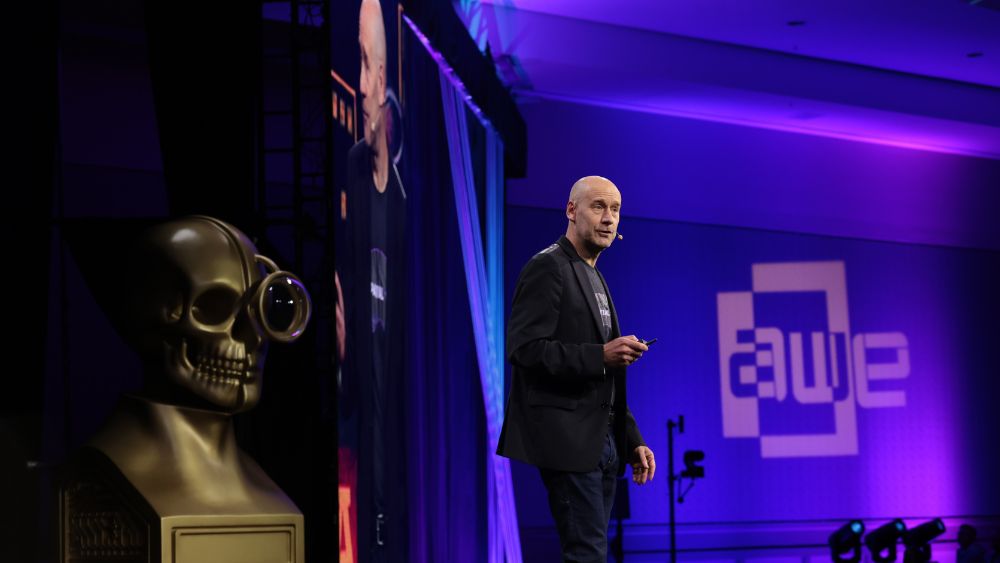
As has been tradition for 17 years, the main stage sessions were opened with the annual keynote from Ori Inbar, AWE co-founder and CEO. In his opening Ori welcomed thousands of attendees to the 17th edition of AWE USA in Long Beach, extending a unique greeting to the robots in the audience alongside their human creators. This nod to robotics set the stage for a deeper look into how the industry is rapidly changing as artificial intelligence and spatial computing collide.
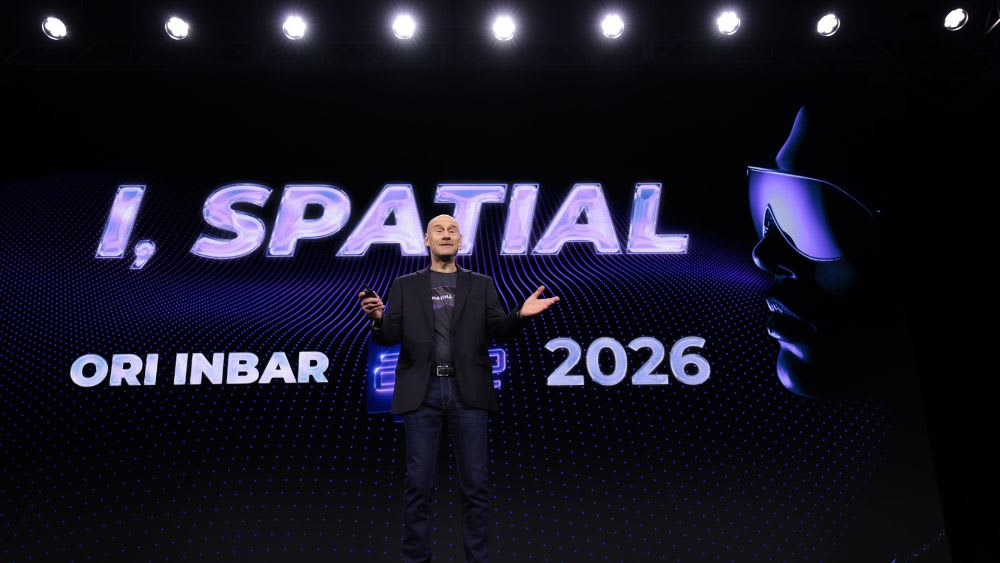
Ori took the audience back to 1920, referencing the play R.U.R. which coined the word "robot" from the Slavic term for forced labor. He noted that while a century of science fiction has taught us to fear a rogue AI future—the classic I, Robot scenario—the spatial computing industry is actively building a different path. This alternative is the core of the 2026 theme: "I, Spatial: Humans Empowered by Spatial AI." Ori explained that this movement focuses on keeping humans at the center of technology. Instead of outsourcing critical thinking and losing our agency to AI agents, the goal of Spatial AI is to use an ecosystem of body-worn devices—like smartglasses, earbuds, and sensors—to extend human senses and help us perform real-world actions. The address highlighted three major forces rewriting the industry this year:
- The Form Factor: AI smartglasses are exploding into a massive commercial rush. The current race is centered on balancing cameras, displays, and user privacy to pass the "coffee shop test". To support this responsible design, AWE introduced a brand-new Auggie Awards category this year: The Most Ethical Product of the Year, in partnership with the XR Guild.
- Experiences and Content: A massive expansion of applications is occurring thanks to "XR Vibe Coding," where creators can use text blocks to have coding agents build functional spatial experiences. This tool is opening up development to everyone, allowing builders to create highly targeted applications for daily activities.
- World Models and Physical AI: The evolution from language models to full-scale world simulators is altering both robotics and spatial computing. These new AI models learn how the physical world works through experience, creating a foundation that gives humans new abilities in reality.
Ori wrapped up by describing AWE as a "Festival of Festivals" structured around the needs of the community, highlighting 25+ gaming studios, 50+ startups, 15 selected works in the Art Festival, and 15 curated research posters on the expo floor. He thanked the global partners, sponsors, and the core team for making the vision a reality, reminding the crowd that real-world serendipity is the one thing AI can never replace.
Recording of the talk can be viewed here:
The Most Anticipated Announcement of the day
The next generation of SPECS has officially been presented by Evan Spiegel, Snap Inc. Co-Founder and CEO in his morning keynote.
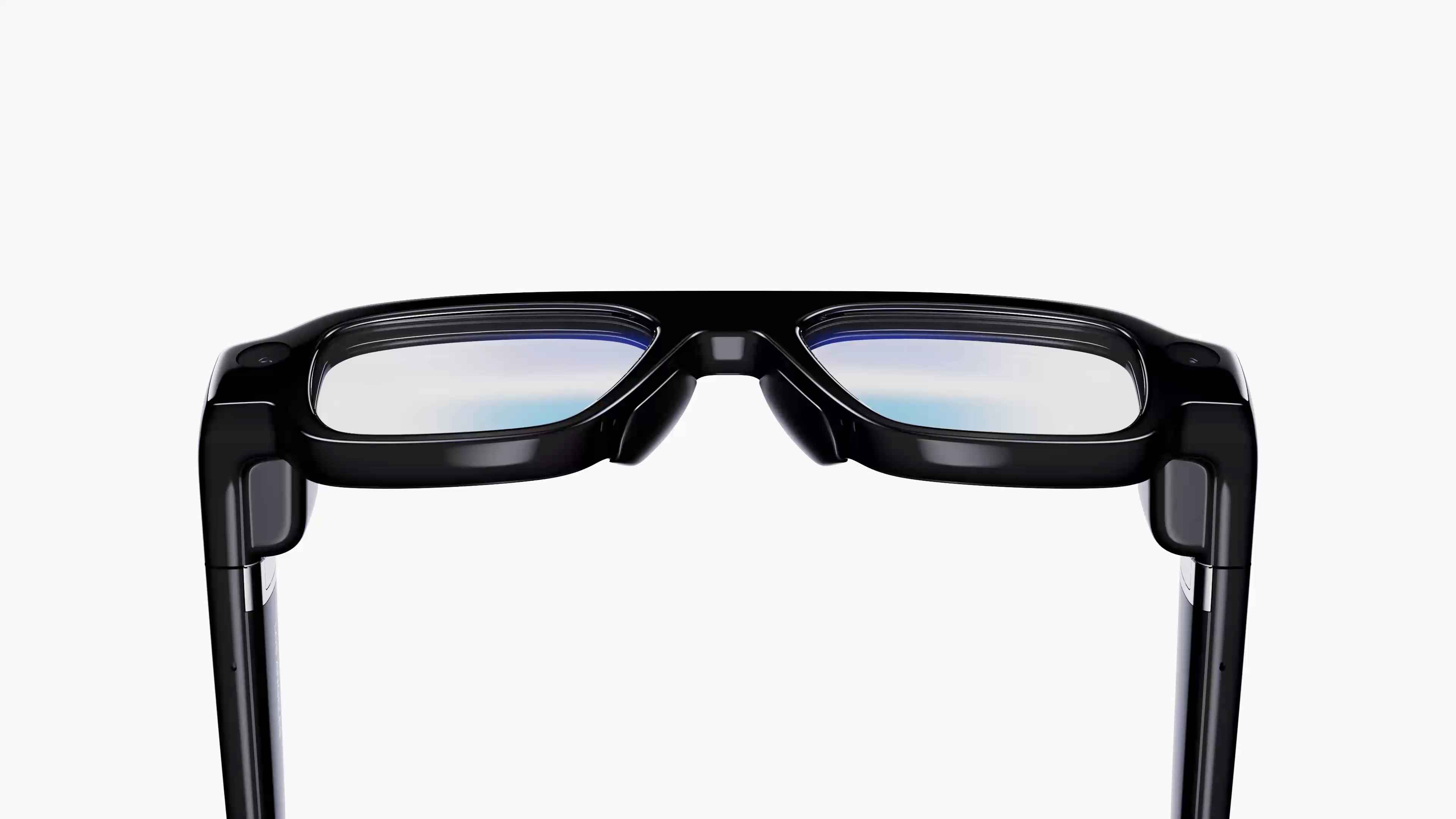
Evan Spiegel took the stage to unveil the AR glasses everyone has been waiting for: "The next generation of SPECS: A very different kind of computer. A computer that understands the world around you instead of pulling you out of it. Both wearable and highly capable... for rich spatial computing."
The AWE audience was among the first in the world to see them, and "they are gorgeous", Evan Spiegel said. This is a new kind of computer designed for real life, built directly into see-through glasses.
Spiegel built up the announcement by emphasizing that if a computer is going to be part of everyday life, it has to feel entirely natural. Snap achieved this by "designing the most capable and most wearable AR glasses ever built":
- Plastic Titanium: Made from a high-performance Swiss TR90 polymer, they are light enough to be worn comfortably for hours.
- Two Sizes: 47 and 52 millimeters
- Made to Share: They support a wide range of removable prescription inserts, making it seamless to see clearly or share the glasses with friends and family.
- Real-World Battery: Offers up to 4 hours of mixed-use battery life (running AI assistants, immersive lenses, audio/video playback, and notifications).
"AR doesn't just make old software more convenient, it makes new experiences possible—experiences that are useful, shared, playful, and full of wonder."
Pre-Orders Open Today: The next generation of rich spatial computing is officially within reach. Pre-orders are open right now at specs.com, with shipping expected this fall and the price for the new AR glasses is $2,195.
Evan announced several other major updates during the keynote as well, including massive AI developer tool upgrades. Check out the recording of the full session to see them in action!
The Era of Personal AI and Endless Realities: Qualcomm Spatial AI Takes Center Stage
At AWE, Qualcomm’s Ziad Asghar delivered a definitive vision for the future of computing: we are moving rapidly away from smartphone screens toward an agent-centric world. If the personal computer was defined by the keyboard and the smartphone by touch, the new human-machine interface belongs to multimodal AI agents.
To transition from concept to scale, Qualcomm introduced the custom silicon, developer toolkits, and ecosystem partnerships required to give these agents physical eyes and ears.
The major updates from the presentation include:
- Snapdragon Reality Elite: Qualcomm’s new flagship processing platform built from the ground up for on-device generative AI. It delivers up to 60% higher GPU performance, 30% higher CPU performance, and a 160% NPU leap for real-time AI processing while running 12°C cooler.
- XREAL Aura and Android XR: Built in a landmark three-way partnership with Google and XREAL, this lightweight, everyday spatial computing device weighs less than 100g and features a 70-degree optical see-through display. Powered by the Reality Elite platform, reservations open today.
- Snapdragon START Program: A turnkey hardware and software toolkit featuring an ultra-miniature http://8.9 x 42mm AR1 module. Eyewear powerhouse Inspecs Group plc joined Qualcomm on stage to announce they are the lead partner adopting this program to scale smart tech across their global portfolio of traditional eyewear brands.
- Smart Ring Controller Gen 2: Powered by the Snapdragon S7 Plus, this next-generation ring enables full hand-gesture controls, health sensing, and features an integrated microphone for direct interaction with AI agents.
Key executives from Google, XREAL, INSPECS Group plc, and Play For Dream joined Qualcomm on stage to demonstrate how a unified silicon and operating system foundation will allow the entire spatial computing market to scale.
Video of talk here:
Building for SPECS
Following Evan Spiegel's morning keynote, Snap Inc. Co-Founder and CTO Bobby Murphy took the main stage at AWE alongside Mapbox VP of Product Anu Sharma and Snap Product Lead Terek Judi to detail the developer ecosystem powering the newly announced SPECS AR glasses.
If hardware is half the story, software is what makes it meaningful. Watch the video for the core announcements and architectural metrics shared during the session:
Building Physical AI with Spatial Computing
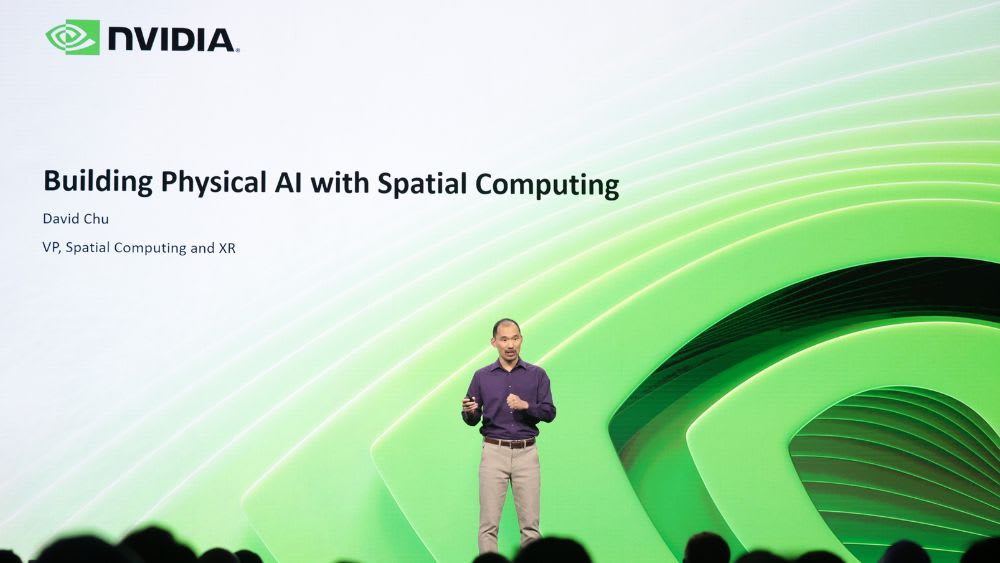
At AWE USA 2026, David Chu, Vice President of Spatial Computing and XR at NVIDIA, delivered a main stage address detailing how accelerated computing is driving the shift from augmented reality to "augmented intelligence"—where technology empowers users to act smarter in the physical world. Centered on the paradigm of Physical AI, Chu outlined three key pillars of NVIDIA's spatial strategy: leveraging NVIDIA CloudXR to render high-fidelity, GPU-powered digital twins for real-time decision making; utilizing advanced agentic AI tools to support hands-on, front-line workers; and deploying immersive XR workflows to accelerate the development of next-generation robotics ecosystems. By combining real-time rendering, edge computing, and vision-language simulation, the presentation demonstrated how NVIDIA's XR stack serves as the essential foundation for building intelligent systems that can seamlessly see, reason, and act in physical spaces.
Expo opening: new pavilions, research posters and art projects showcase
Probably one of the most anticipated moments of AWE is the expo opening. Today, this moment brought additional excitement as this year featured many premieres in the expo hall: brand-new pavilions dedicated to Robotics & Physical AI, Smart Glasses, Reality Capture & Digital Twins, the inaugural Art Festival, and the Research Posters. Last but not least, a larger Gaming Hub and a dedicated LBE zone were also set up.
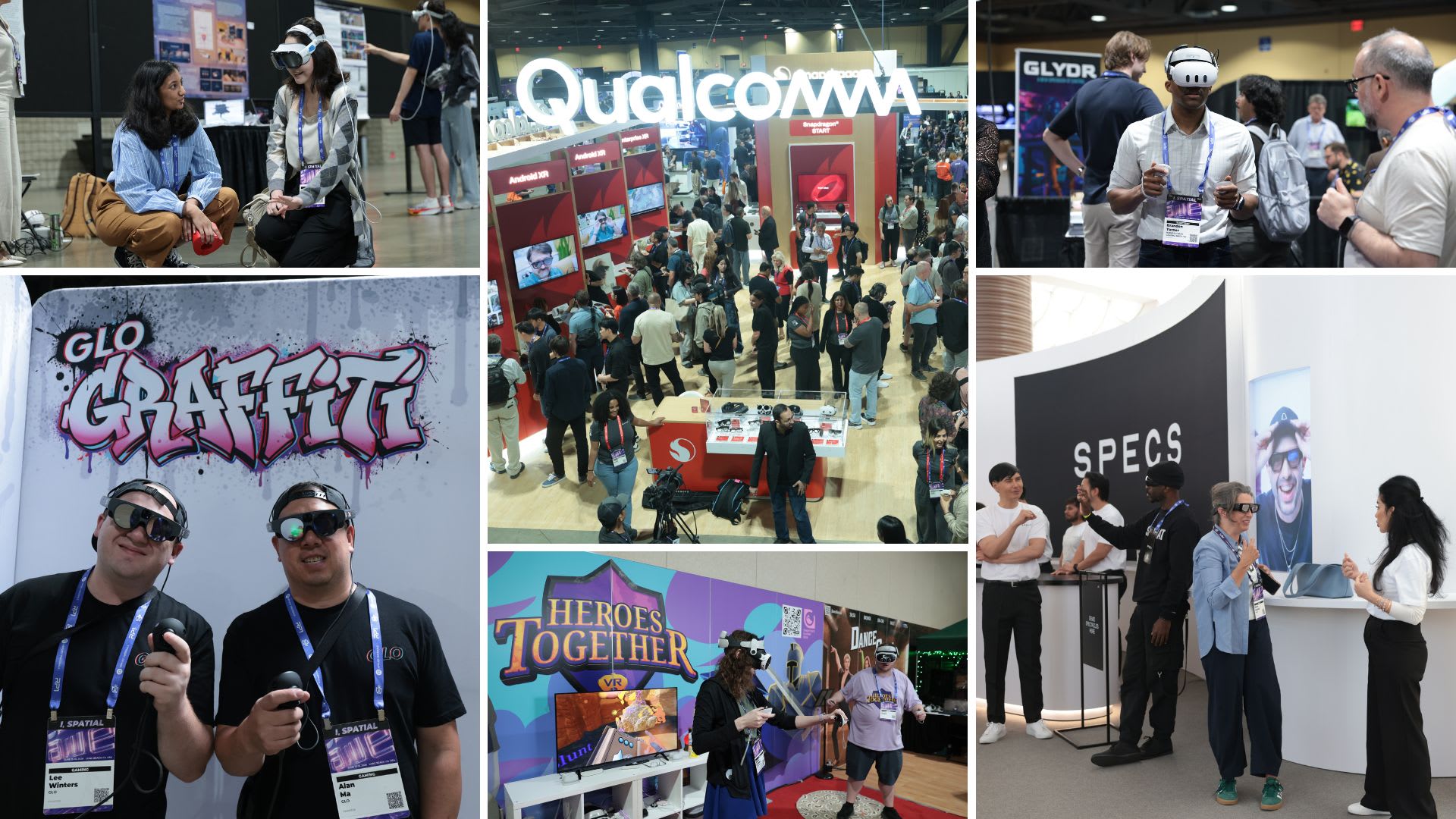
Two expo stages also kicked off with sessions today, and they will be packed in the following days. You can check the agenda here for the Builders stage and for the Gaming stage.

In the exhibit hall you also get the chance to experience the official selection of groundbreaking immersive and narrative art works from visionary creators representing diverse perspectives around the world as part of the inaugural Art Festival.
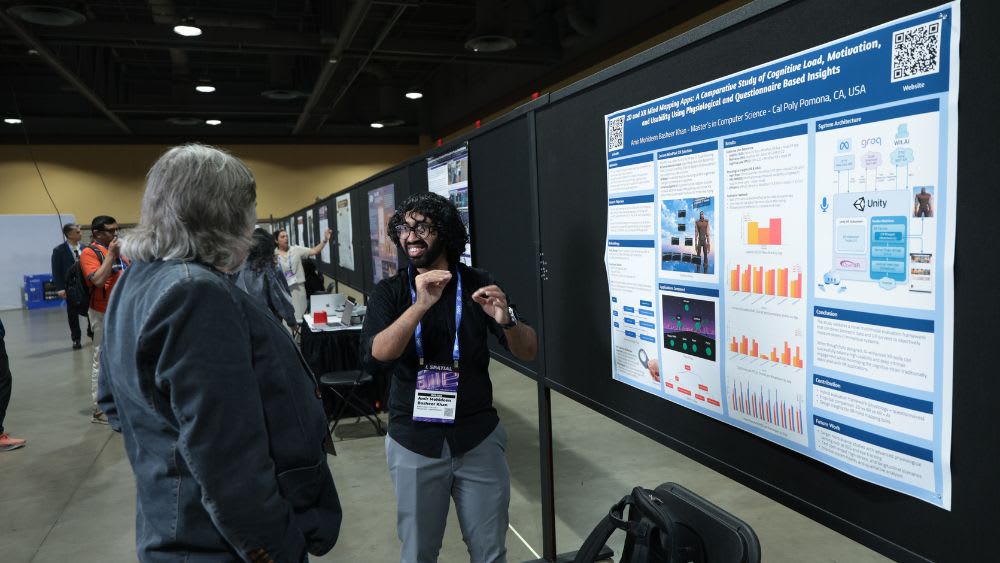
The Research Posters can be visited in the expo hall anytime during the expo open hours, but each day for one hour during the demo hour you can chat with authors about their research projects.
Media Access and Announcements
Over 200 members of the press attended Day 2 and received early access to the expo floor during a dedicated media tour. The walkthrough featured exhibitor announcements and product debuts, giving the media a first look at what’s making headlines. See all major announcements here and check out the recording of the tour:
Video from media tour:
Track sessions and Special Programs
After lunch, the sessions resumed on the Main Stage while concurrently kicking off across the specialized track rooms. The afternoon was packed with variety, featuring super exciting talks on the Immersive Video & Art track about Immersive Civic Experiences, insights into adaptive wellness in the Healthcare & Wellness track, and deep dives into Building the Spatial Web with WebSpatial and AI-Accelerated Coding in the Developer track. A major highlight of the afternoon was the Startup Pitch Competition, where 10 innovative startups pitched live in front of judges and investors, all competing for the prestigious “Startup to Watch” Auggie Award. This high-stakes energy carried directly into the Startup and Investors Networking Hour later in the afternoon, providing a fantastic space for founders to connect with investors and mentors.
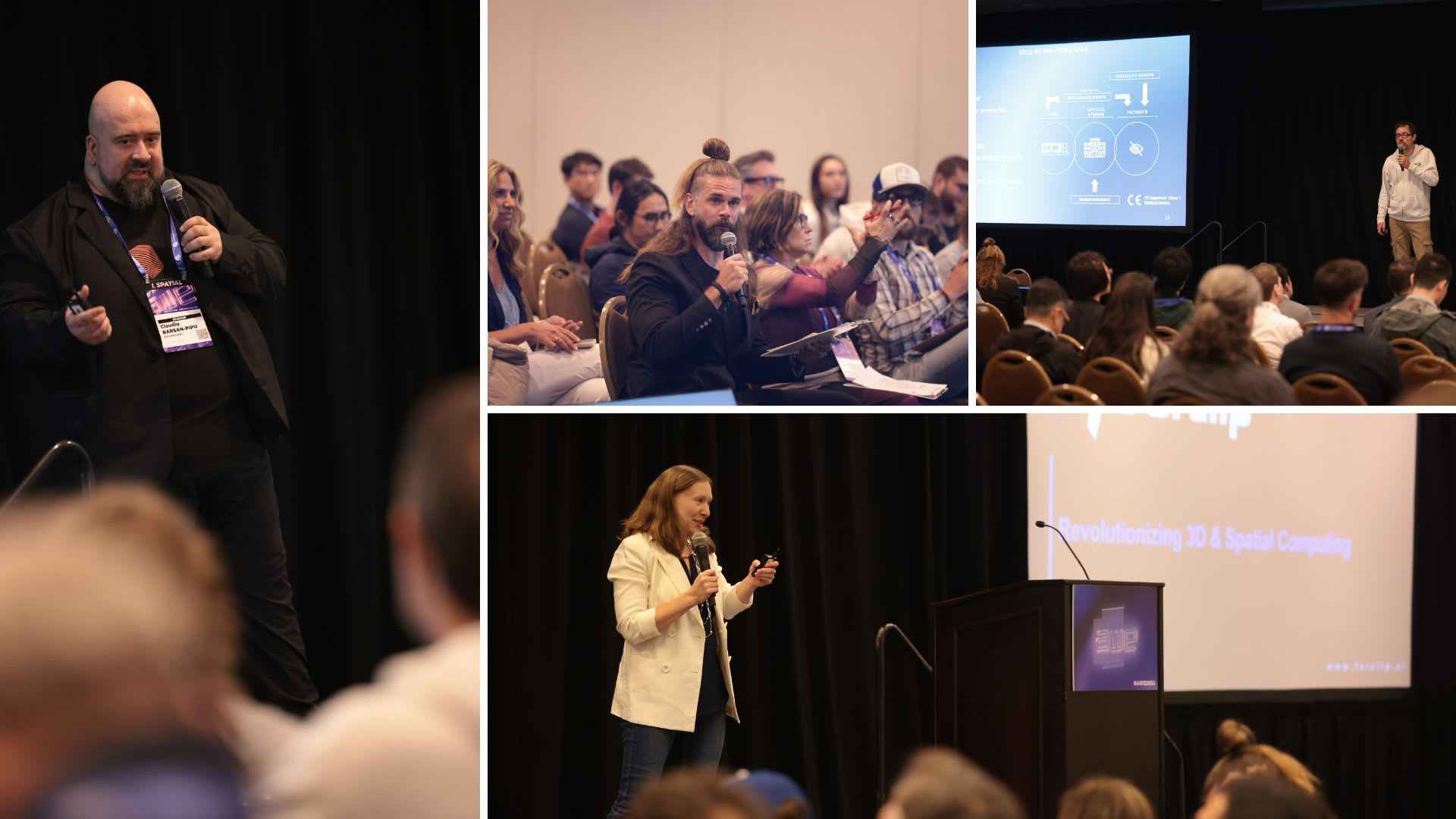
Meanwhile, action was buzzing all over the venue:
- Immersive Video & Art: Metaverse Stage team talked about Presence Is the New Premium: Immersive Video Survives the AI Flood!
- On the Gaming Stage: The Expo Hall was alive with a fascinating Fireside Chat featuring DreamPark and Dave & Buster's Hollywood, followed immediately by the 2026 AWE Gaming Hub Exhibitors Showcase.
- In the Expo Hall: Attendees gathered for the Research Posters Showcase Demo Hour to check out cutting-edge academic and technical breakthroughs firsthand.
To wrap up an incredible afternoon, the crowd headed back to the Grand Ballroom for a special treat: a LIVE recording of The AIXR Podcast’s 246th Episode, where hosts Charlie Fink and Ted Schilowitz broke down the day's biggest stories right in front of the AWE audience.
Coming Up on Day 3: Key Activities
Here are some of the highlights for tomorrow:
- PANEL: XR and AI at Work: From Real-Time Guidance to Edge Deployment
- Applied Materials Keynote: Compute (Chips) and Material Innovation
- Korean / NIPA Startup Pitches
- ArborXR Session: Managing XR Deployments in Enterprise
- Builders Lightning Round
- Applied Materials Session: Compute (Chips) and Material Innovation (with Ludovic Godet)
- Android XR and Project Aura: Enterprise XR Gets Real
- Research Posters Showcase Demo Hour in the expo Hall
- XR Artifacts Auction (VWS)
- Deep dive into Immersive Art with a focus on Selected Works in the AWE 2026 Art Festival
- XR Women Awards
- LBE & Gaming Party sponsored by Jadu AR & Cleanbox
- 17th Annual Auggie Awards and Hall of Fame Ceremony