7 May 2026
|
Mike Boland
AWE Talks: XR Meets Creative and Cultural Sectors
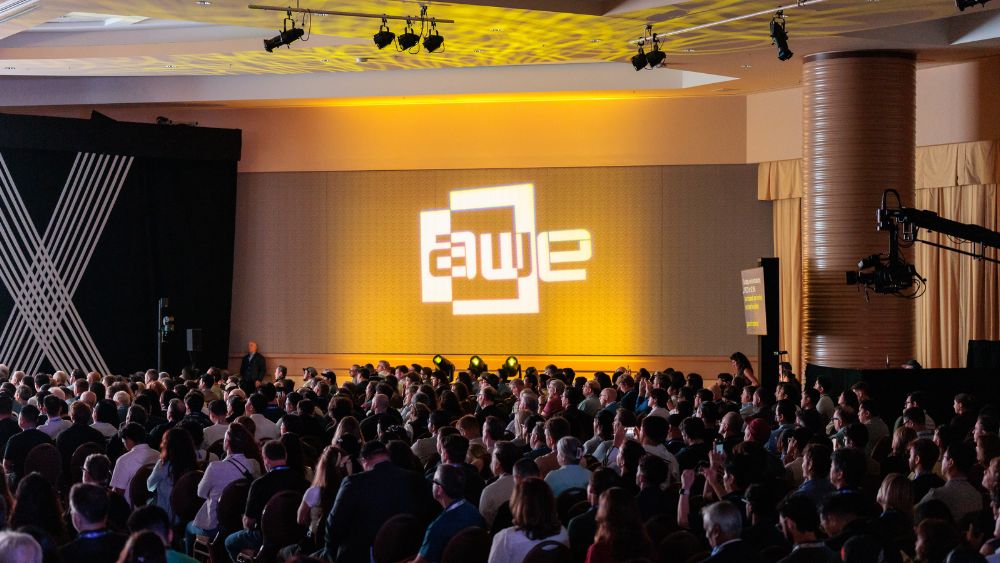
Welcome back to AWE Talks, our series that revisits the best AWE conference sessions. With AWE EU 2025 concluded, we have a fresh batch of session footage to sink our teeth into for weeks to come.
We continue the action this week with a look at XR's role in creative and cultural sectors. How can the technology inject depth and dimension into everything from journalism to art exhibition?
See the summarized takeaways below, along with the full session video. Stay tuned for more video highlights each week and check out the full library of conference sessions on AWE’s YouTube Channel.
Speakers
Tupac MARTIR - SATORE STUDIO
Trevor Ó CLOCHARTAIGH - TG4
Philine KREUZER - The Netherlands Institute for Sound and Vision
Marie HOSPITAL - Agence France-Presse
Niall Murray - Technological University of the Shannon
Pablo CESAR - CWI
Key Takeaways & Analysis
- – Discussions about XR often focus on prevalent use cases like entertainment and enterprise productivity.
- – But what about the technology's role in advancing societal good, cultural enrichment, and creative sectors?
- – This broad body of XR applicability includes XR in journalism, art exhibition, and performing arts.
- – In journalism, for example, VR can help reporters research topics and get a deeper sense of source material.
- – It can also engender immersive companion experiences to traditional written narratives for publications.
- – Reporters at a recent ski jump competition stitched their on-site images with drone footage for volumetric video.
- – VR's use in newsrooms can make it sexy and help recruit younger generations who shy away from journalism.
- – In museums and art exhibitions, VR can help place-shift the experience to wider audiences.
- – This includes immersive walkthroughs, as well as gamified experiences that play on the themes and subjects.
- – Traditional challenges include rigorous experience development for exhibits that have a limited time window.
- – Innovators have sidestepped this challenge by creating reusable templates for immersive museum experiences.
- – In performance art, there's likewise an opportunity to create immersive views into a given production.
- – This can extend productions beyond their limited geographic footprint, and make them more dimensional.
- – Challenges so far include the fact that it's hard to capture the ethos of a production in VR.
- – One recent innovation is to create productions – or companion experiences – that are native to VR.
- – This is more effective than taking a stage performance and trying to capture it in 180 or 360 and port it to VR.
- – Like other segments and opportunities for XR, all the above is a moving target and in early stages of development.
For more color and depth, see the full session below...

Want more XR insights and multimedia? ARtillery Intelligence offers an indexed and searchable library of XR intelligence known as ARtillery Pro. See more here.