2 Apr 2026
|
Mike Boland
AWE Talks: Where is Enterprise XR Working?
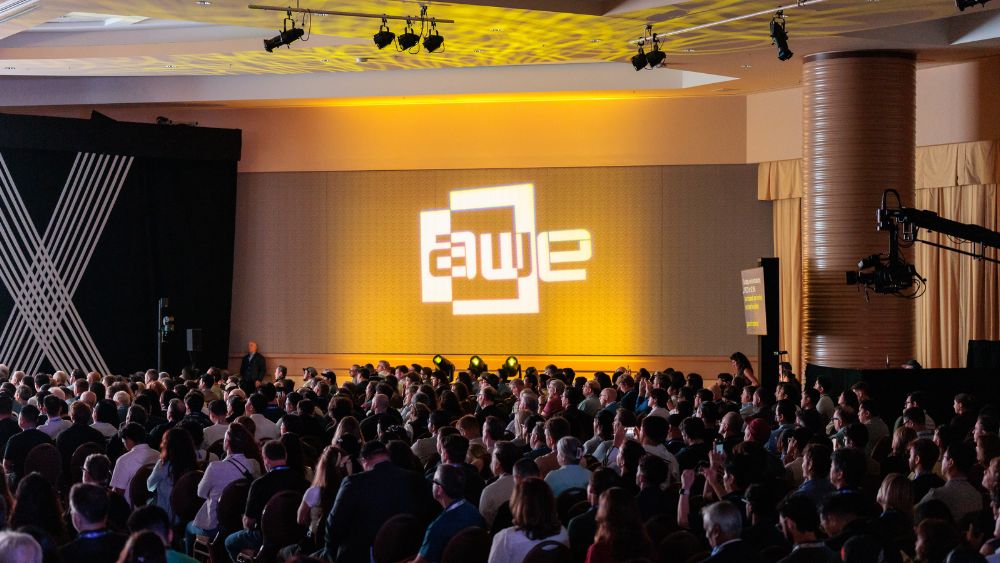
Welcome back to AWE Talks, our series that revisits the best AWE conference sessions. With AWE EU 2025 concluded, we have a fresh batch of session footage to sink our teeth into for weeks to come.
We continue the action this week with a focus on Enterprise XR. What's the state of the art, driving factors, and implementations that are working? We answer those questions through the lens of three case studies.
See the summarized takeaways below, along with the full session video. Stay tuned for more video highlights each week and check out the full library of conference sessions on AWE’s YouTube Channel.
We continue the action this week with a focus on Enterprise XR. What's the state of the art, driving factors, and implementations that are working? We answer those questions through the lens of three case studies.
See the summarized takeaways below, along with the full session video. Stay tuned for more video highlights each week and check out the full library of conference sessions on AWE’s YouTube Channel.
Speakers
Mathieu DEMARÉ, XR Wallonia HITT
Thomas KUBSKI, Deloitte Digital,
Aakash MAKHIJA, Airbus
Mohamed MAROUENE, SoWhen?
Key Takeaways & Analysis
– Enterprise productivity continues to be one of the biggest revenue drivers in XR
– While consumer markets take longer to develop, there's demand today in enterprise.
– This involves everything from line-of-sight AR guidance to immersive VR training.
– The breadth of applicability in varied use cases and verticals makes it opportune.
– And while this isn't a new topic in the world of XR punditry, it continues to evolve.
– With every deployment comes new lessons, best practices, and tech evolution.
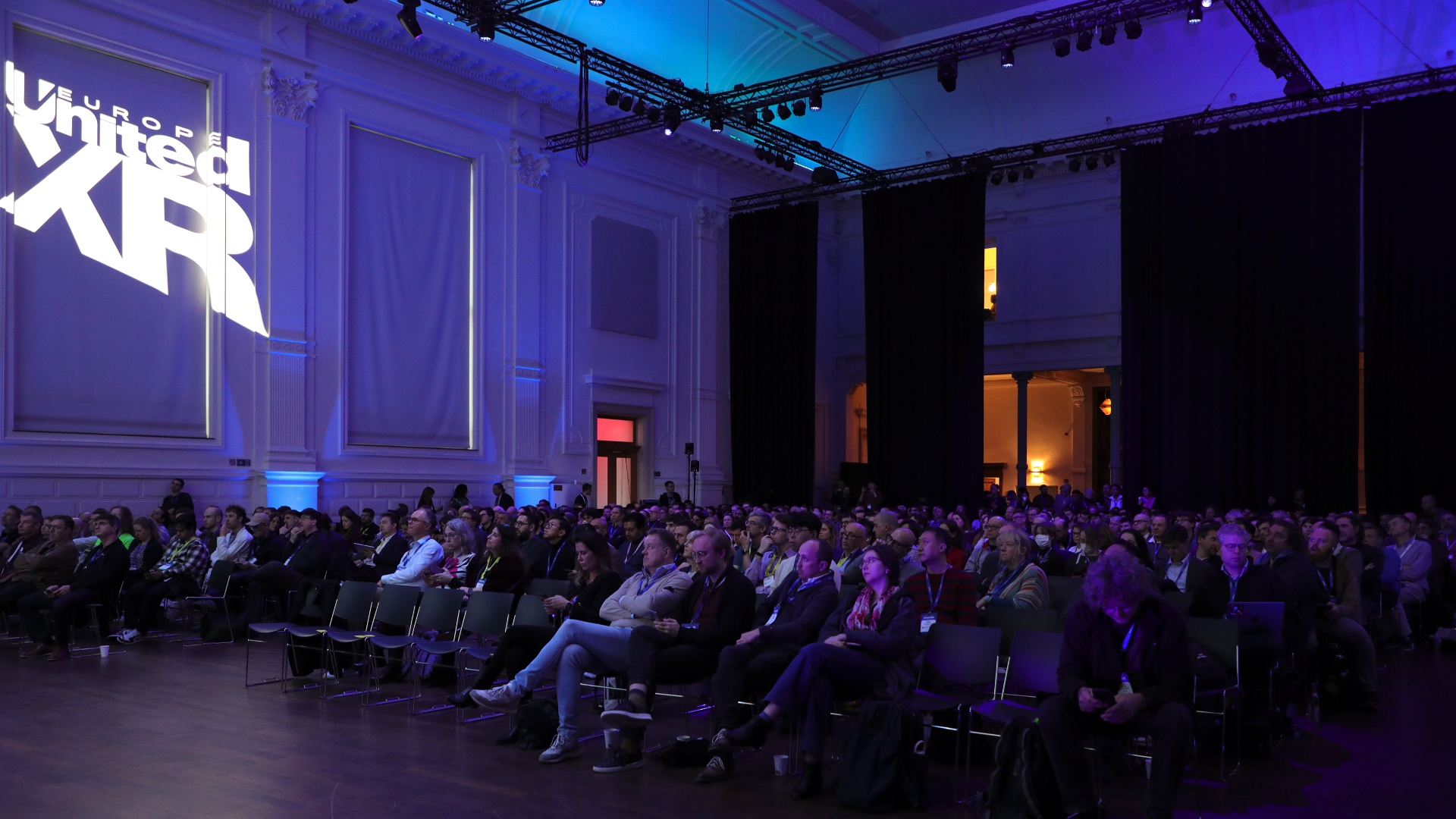
– Three such deployments were on hand at XR Unite: Nesle, Airbus, and Alstom.
– Starting with Nestle, it simulates costly factory site visits through virtual interactions.
– This replaced the factory quality-assurance visits that healthcare professionals do.
– With virtual immersive visits, it streamlined processes and maintained satisfaction.
– Quantifiable results include 15,000 virtual site visits and a 98% satisfaction score.
– The effort also reduced Nestle's carbon footprint by 60 tons of CO2 per month.
– Meanwhile, Airbus used Hololens-based sequences to check aircraft safety signs.
– This involves the safety placards that are operationally critical in aircraft interiors.
– When signage is placed incorrectly, it can cause commercial jets to be grounded.
– Traditional quality assurance involved paper, translating 2D graphics to 3D space.
– With line-of-sight AR, real-world signage is checked against an in-situ digital twin.
– By doing this, Airbus reduced inspection time 40% and increased task completion 50%.
– Lastly, railway giant Alstom implemented VR training to simulate cybersecurity events.
– As a transportation operator, such events can have a debilitating effect on operations.
– With virtual training, it simulates events for effective recall and muscle memory.
– This includes training modules such as searching a dark room for cyber threats.
– Tracked physical objects are included, such as a flashlight to investigate spaces.
– These are just three examples. We'll continue to see rapid enterprise XR evolution.
For more color and depth, see the full session below...

Want more XR insights and multimedia? ARtillery Intelligence offers an indexed and searchable library of XR intelligence known as ARtillery Pro. See more here.
– Enterprise productivity continues to be one of the biggest revenue drivers in XR
– While consumer markets take longer to develop, there's demand today in enterprise.
– This involves everything from line-of-sight AR guidance to immersive VR training.
– The breadth of applicability in varied use cases and verticals makes it opportune.
– And while this isn't a new topic in the world of XR punditry, it continues to evolve.
– With every deployment comes new lessons, best practices, and tech evolution.
– Three such deployments were on hand at XR Unite: Nesle, Airbus, and Alstom.
– Starting with Nestle, it simulates costly factory site visits through virtual interactions.
– This replaced the factory quality-assurance visits that healthcare professionals do.
– With virtual immersive visits, it streamlined processes and maintained satisfaction.
– Quantifiable results include 15,000 virtual site visits and a 98% satisfaction score.
– The effort also reduced Nestle's carbon footprint by 60 tons of CO2 per month.
– Meanwhile, Airbus used Hololens-based sequences to check aircraft safety signs.
– This involves the safety placards that are operationally critical in aircraft interiors.
– When signage is placed incorrectly, it can cause commercial jets to be grounded.
– Traditional quality assurance involved paper, translating 2D graphics to 3D space.
– With line-of-sight AR, real-world signage is checked against an in-situ digital twin.
– By doing this, Airbus reduced inspection time 40% and increased task completion 50%.
– Lastly, railway giant Alstom implemented VR training to simulate cybersecurity events.
– As a transportation operator, such events can have a debilitating effect on operations.
– With virtual training, it simulates events for effective recall and muscle memory.
– This includes training modules such as searching a dark room for cyber threats.
– Tracked physical objects are included, such as a flashlight to investigate spaces.
– These are just three examples. We'll continue to see rapid enterprise XR evolution.
For more color and depth, see the full session below...
Want more XR insights and multimedia? ARtillery Intelligence offers an indexed and searchable library of XR intelligence known as ARtillery Pro. See more here.