7 Aug 2025
|
Mike Boland
AWE Talks: Going Inside Palmer Luckey's Mind
AWE USA 2025
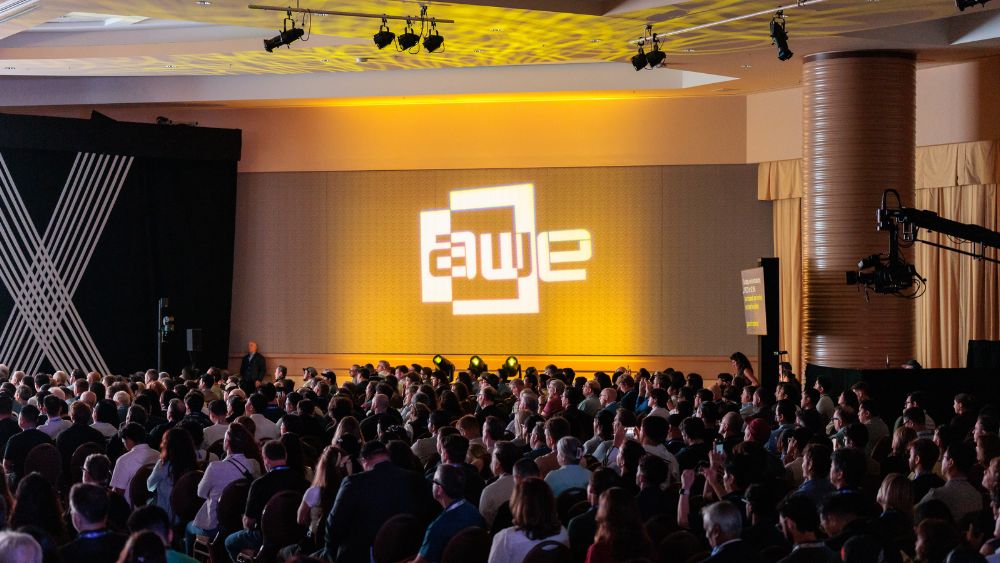
Welcome back to AWE Talks, our series that revisits the best AWE conference sessions. With AWE USA 2025 concluded, we have a fresh batch of session footage to sink our teeth into for weeks to come.
We continue the action this week with one of XR's earliest and most prolific visionaries: Palmer Luckey. What's he doing to advance the field and to bring elevated vision to U.S. defense interests?
See the summarized takeaways below, along with the full session video. Stay tuned for more video highlights each week and check out the full library of conference sessions on AWE’s YouTube Channel.
Speakers
Palmer Luckey, Anduril
Stephanie Riggs, NiaXPHERE
Speakers
Palmer Luckey, Anduril
Stephanie Riggs, NiaXPHERE
Key Takeaways & Analysis
– Too often, XR advocates don't recognize the field's inception and beginnings in U.S. defense.
– Much like the internet, that's the soil from which XR sprouts in terms of its first funding and use.
– Palmer Luckey and Anduril are looking to bring the technology back to defense endpoints.
– XR has meanwhile advanced in consumer and enterprise realms, which can benefit defense.
– These sources of funding, innovation, and motivation will bounce between consumer and defense.
– But when working on defense-related XR endpoints, there is a different set of dynamics and challenges.
– The budgetary constraints are sometimes liberated, due to willingness to spend for effective outcomes.
– There's also a bit of an opportunity cost: getting it wrong could cost lives... so cost sensitivity is lessened.
– In that sense, devices built for defense can have advanced specs that consumer markets wouldn't bear.
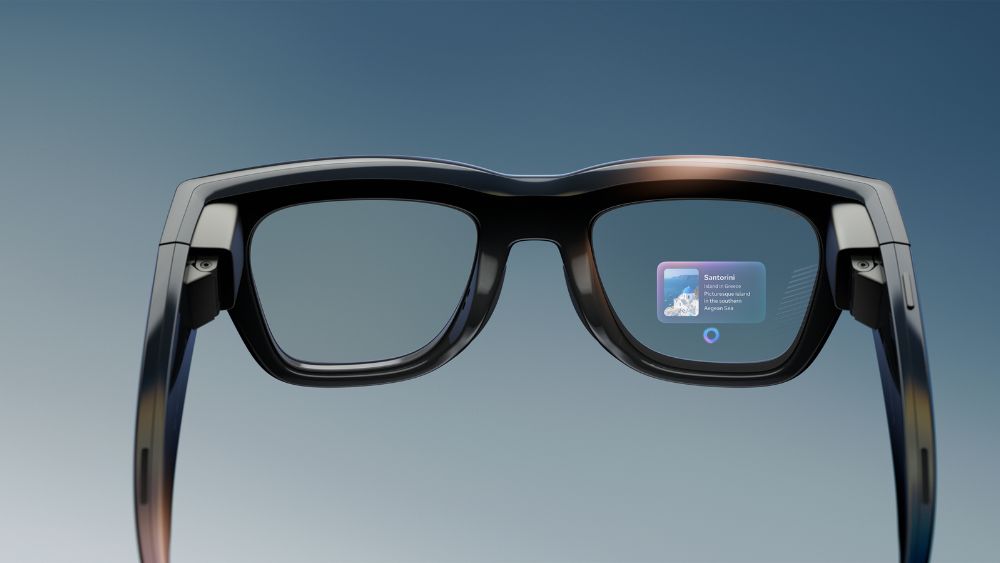
– This all boils down to the fact that Anduril's Eagle Eye will produce the most advanced headset to date.
– But Eagle Eye isn't just a device, it's a platform and an underlying tech for vision augmentation.
– The idea is to make military personnel safer and more effective by being able to "see" in different realms.
– Those realms include the thermal realm, the RF realm, the aerial realm (detecting drone threats), and others.
– Altogether, it's about giving a tactical advantage to military personnel in the field at all levels.
– But back to the point about the interplay with consumer markets, these advances could migrate over.
– That will happen through Eagle Eye's partners that transfer that tech back to consumer markets.
– Partners so far include the likes of Meta and Qualcomm, who have licensing agreements to utilize the tech.
– Beyond the XR-related tech for vision augmentation, AI will be a big component... but there are challenges.
– Defense tech can't rely on the cloud or other connectivity because that puts it at security or failure risk.
– So Eagle Eye instead formulates and deploys AI models that can operate locally.
– Ultimately, the goal is to have a guardian angel looking over your shoulder for situational intelligence.
– It's not about querying AI, like we do in consumer contexts, but having it proactively detect threats.
– That ambient and proactive approach also defines the UX parameters that are most effective in defense.
– In these scenarios, the best interface is no interface, in terms of proactive and automated functions.
– But there's also a balance of human control and decision making, after being fed the data and intel.
– This differs from consumer UX, as it would be boring to have so few inputs in a gaming context.
– At the same time, military personnel can't spend all their time and attention on UX mode switching.
"Superman doesn’t have to go through menus to activate his heat vision," said Luckey.
For more color and depth, see the full session below...

Want more XR insights and multimedia? ARtillery Intelligence offers an indexed and searchable library of XR intelligence known as ARtillery Pro. See more here.