25 Sep 2025
|
Mike Boland
AWE Talks: The Evolution of Gaming in the Spatial Era
AWE USA 2025
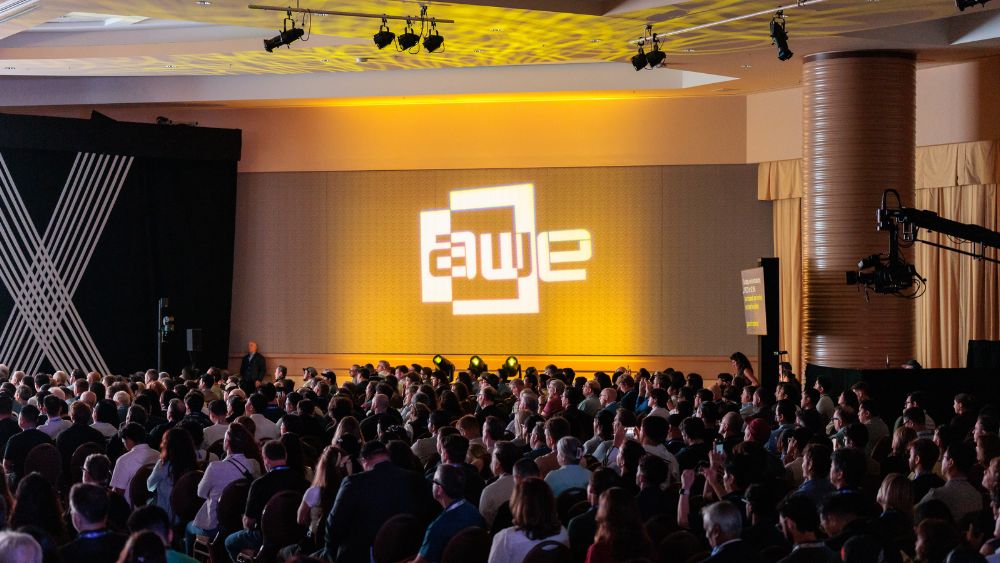
Welcome back to AWE Talks, our series that revisits the best AWE conference sessions. With AWE USA 2025 concluded, we have a fresh batch of session footage to sink our teeth into for weeks to come.
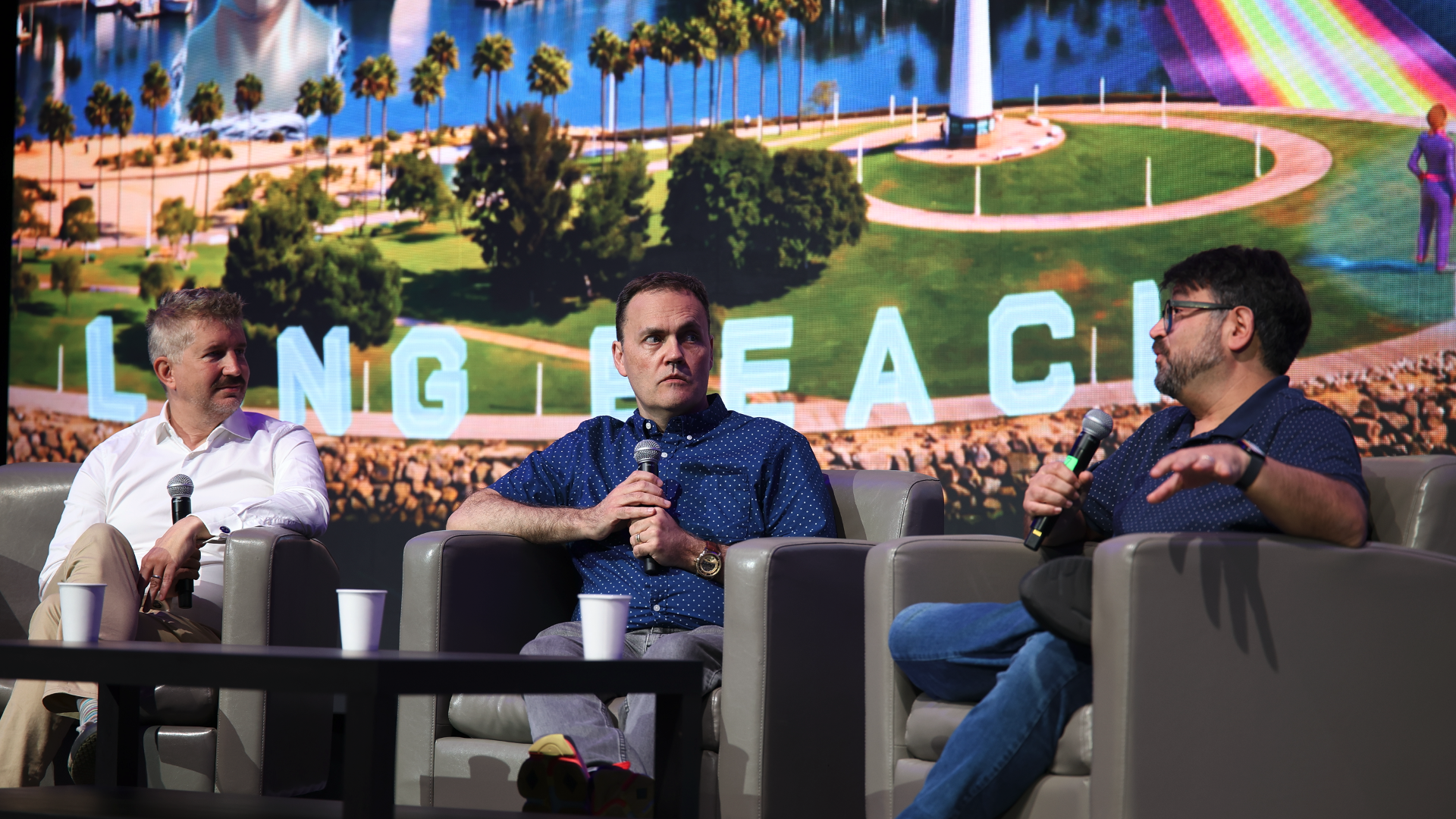
After covering XR gaming dynamics last week with Nolan Bushnell and his family, we continue the action this week with insights from XR-forward gaming studios. The always-insightful Jesse Schell and Tomy Palm weigh in.
See the summarized takeaways below, along with the full session video. Stay tuned for more video highlights each week and check out the full library of conference sessions on AWE’s YouTube Channel.
Speakers
Jesse Schell, Schell Games
Tommy Palm, Resolution Games
Scott Stein, CNET
Speakers
Jesse Schell, Schell Games
Tommy Palm, Resolution Games
Scott Stein, CNET
Key Takeaways & Analysis
– VR's transformation of gaming is a well-established topic, given dimension and embodiment.
– But a newer phenomenon is the opportunities to expand the medium with mixed reality.
– This not only unlocks more formats and play mechanics, but it also VR's addressable market.
– For example, VR's full immersion is an advanced or intimidating concept to many people.
– Bringing home environments into immersive gaming can make it more familiar and inviting.
– But mixed reality isn't a silver bullet and shouldn't be tacked on to VR to achieve the above.
– Mixed reality should only be applied (or added to VR as a mode) when it's native and natural.
– For example, if one's space (such as a tabletop) is aligned with gameplay, it make senses.
– Conversely, if physical space doesn't add anything, a given game is likely better off in VR.
– This can be the case with thematic mismatch, such as mideival warriors in your living room.
– A fully imagined gamescape that is more on-theme may be much better in that scenario.
– Bottom line: be thoughtful about what each modality does well and apply them accordingly.
– With mixed reality it's important to lean into two elements says Schell: people and furniture.
– The latter may sound trite but furniture is our interface with physical spaces, so use it wisely.
– Speaking of which, one key consideraiton in XR gaming is whether it's seated or unseated.
– Both can be offered through play modes... but that should only been done when its natural.
– The advantage in offering both (when applicable) is to cast the widest net in terms of appeal.
– Another question is whether to support controllers or increasingly-capable hand tracking.
– These each have advantages but Schell warns to not overlook the value of game controllers.
– For example, haptic feedback is a biological need that is unfulfilled by hand-tracking alone.
– The answer for all the above – just like we examined in last week's video – is play testing.
– There's no one-sized-fits all, and it will depend on several variables that orbit a given game.
– Ingesting player feedback at scale is strongly recommended for finding the right sweet spot.
– This goes for any one game, but also the broader evolution of gaming... and people.
"Like it always happens, the technology is changing," said Schell, "but humans are changing too."
For more color and depth, see the full session below...

Want more XR insights and multimedia? ARtillery Intelligence offers an indexed and searchable library of XR intelligence known as ARtillery Pro. See more here.